
The Importance of Data Center Security: The Features and Systems You Need
As data centers become increasingly common and under more stress than ever, it is essential to maintain the latest security upgrades. Here is a closer look at the features and systems you need to stay protected.
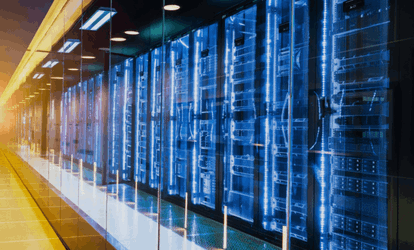
Data centers hold the infrastructure that keeps hospitals, banks, retailers, AI platforms, and government agencies running. A single unauthorized entry or overlooked vulnerability can expose sensitive systems, disrupt critical operations, and create significant security and business continuity risks.
That's why data center security has to be an integrated network of physical security, access control, and network infrastructure. Let's take a closer look at the features and systems needed to protect a modern data center.
The Growing Importance of Data Center Security
It's easy to think of data center security as a server-room problem: firewalls, encryption, antivirus software. But physical security is an equally important part of protecting the facility and the systems inside it. If someone can walk into the building, they don't need to hack anything.
A few reasons this matters more every year:
-
The stakes keep climbing. More business-critical data lives in centralized facilities than ever before, thanks to AI platforms, cloud migration, and enterprise consolidation.
-
Compliance requirements are tightening. Compliance frameworks and regulations like System and Organization Controls 2 (SOC 2), Health Insurance Portability and Accountability Act of 1996 (HIPAA), and Payment Card Industry Data Security Standard (PCI DSS) may include requirements or controls related to physical access, facility security, and the protection of sensitive data.
-
Downtime is expensive. Every minute a data center is offline (whether from a breach, sabotage, or even a security-related shutdown) has a real, measurable cost.
-
Insider threats are real. Not every risk walks in through the front door as a stranger. Employees, contractors, and vendors may have legitimate access that must still be carefully managed and monitored.
A data center's security is only as strong as its weakest layer, whether that's a door, a camera blind spot, or a badge reader that hasn't been updated in a decade.
The Core Layers of Physical Data Center Security
Data center security is commonly designed around a layered approach, often referred to as defense in depth. The idea is simple: no single point of failure should be able to compromise the whole facility. Let's take a closer look at the security layers integrated into most data center systems.
1. Perimeter Security
This is the first line of defense, and it's meant to slow down or deter unauthorized access before anyone gets near the building. Features of perimeter security include:
-
Fencing, bollards, and controlled vehicle access points
-
Perimeter lighting and surveillance cameras
-
Security personnel or guard stations at entry points
2. Building Access Control
Once someone reaches the building, access should be tightly controlled and fully traceable. Building access control looks different across data centers, but it may include:
-
Multi-factor authentication (like badge plus PIN, or badge plus biometric)
-
Mantraps or interlocking doors that prevent tailgating
-
Visitor management systems with logged, escorted access
-
Role-based permissions so employees can only reach the areas relevant to their job
3. Interior Zoning
Not every employee needs access to every room. Interior zoning breaks the facility into progressively restricted areas (like the lobby, office space, network operations center, server floor, and so on) with access requirements at each threshold.
4. Video Surveillance and Monitoring
Modern surveillance systems can integrate with access control and real-time monitoring tools to help security teams identify and investigate unusual activity, including:
-
Full coverage of entry points, corridors, and server rooms
-
Video analytics may flag activity such as loitering, tailgating, or propped doors.
-
Retention policies that meet compliance and audit requirements
5. Environmental Protection and Resiliency
Security also involves keeping the facility operational when something goes wrong. These environmental and redundancy systems for data centers may include:
-
Fire detection and suppression systems designed around the facility's equipment, occupancy, and life-safety requirements
-
Redundant power and cooling to prevent forced shutdowns
-
Environmental sensors, such as for unexpected temperature or humidity shifts
Where Physical Security and Network Infrastructure Meet
Many modern physical security systems rely on IP networks, structured cabling, and shared infrastructure, making coordination between security and network teams increasingly important. Network design and reliability can have a significant impact on the performance, visibility, and management of modern access control and surveillance systems. . A camera system is only useful if its footage is stored, encrypted, and accessible when it's needed.
When these systems are specified, installed, and maintained by different vendors working in isolation, gaps often show up. For example, you might find a door that doesn't report its status, a camera feed that lags, or a credentialing system that doesn't integrate with other identity or workforce management systems where that connection is needed.
A coordinated data center security strategy may bring together:
When these are planned together from the start, the result is a facility where security systems work with the building's openings (not around them). You can also enjoy a single point of accountability if something needs troubleshooting, maintenance, or upgrading down the line.
Questions to Ask When Evaluating Your Data Center's Security
If you're assessing an existing facility or planning a new build, a few questions can reveal a lot:
-
Can we trace every entry and exit, down to the individual and the exact door?
-
Are our cameras actively monitored and generating actionable alerts, or primarily being used for post-incident review?
-
What happens if a single badge reader or door controller fails?
-
Are our physical security systems compatible with future upgrades, or will we be replacing them in five years?
-
Who is accountable if a system fails? Is it one vendor, or a patchwork of them?
Building Security That's Designed to Last: CBX Solutions
Data center security is an ongoing system of coordinated hardware, software, and physical infrastructure that has to evolve as threats, compliance requirements, and business needs change.
Strong data center security depends on coordinated planning across physical security, access control, openings, and network infrastructure, regardless of how many vendors are involved. CBX can help simplify that coordination by bringing multiple disciplines together under one partner.
If you're planning, upgrading, or troubleshooting a data center's security infrastructure, the team at CBX Solutions offers all-in-one support, including openings, access control, surveillance, and the network that ties it all together. That's the difference between security that checks a box and security that actually holds up under pressure. Contact us to get started today!