
Total Cost of Ownership: Why the Best Security Investment Isn't the Cheapest One
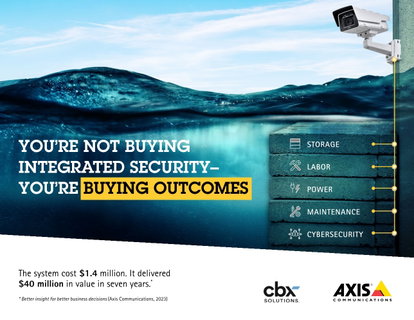
Total Cost of Ownership: Why the Best Security Investment Isn't the Cheapest One
We've all heard "you get what you pay for." With security systems, that's not a cliché. It's the line item that shows up two, five, and ten years after the ribbon-cutting.
Most proposals are built around one number: the price of the cameras, panels, and hardware on day one. But that number was never the real cost of the system. The real cost shows up in the years after install, in what it takes to keep everything running, secure, and working the way it did on day one.
That gap between the number on the quote and the number you actually pay over the life of the system is called Total Cost of Ownership, or TCO. It's the single most overlooked variable in security planning today.
The Question Most Proposals Never Answer About Maintenance Costs
Every building owner asks "what does this cost?" Almost none ask "what does this cost to own?"
That second question is harder, and more important. It's the difference between a system that performs for a decade and one that turns into a string of surprises: unplanned service calls, storage that outgrows its budget, power and infrastructure upgrades nobody scoped for, and a maintenance bill that was never part of the original conversation.
We partnered with Axis Communications, a technology manufacturer, to put real numbers behind this problem. The result is a full breakdown of where TCO actually lives, the specific cost drivers most budgets miss, and what a business case looks like when it's built to survive contact with the CFO. It's a level of detail we don't have room for here, but it's exactly the kind of thing worth having in your back pocket before your next project.
Why a Security Systems Integrator Lowers Your Total Cost of Ownership
Here's what years in this industry have taught us: TCO problems are almost never a hardware problem. They're a coordination problem.
A camera network doesn't exist on its own. It depends on doors and openings being specified correctly, access control systems that talk to the rest of the building, and a network built to carry all of it. When any one of those pieces is handled by a different vendor with a different set of incentives, costs don't just add up, they compound. Nobody's accountable for the whole picture, so nobody catches the problem until it's expensive.
This is what we mean when we talk about systems integration: designing and installing access control, video surveillance, and intrusion detection to work as a single, connected system, carried by a network built to support all of it, instead of as separate products from separate vendors that happen to share a building. Done well, that can mean an access event and its corresponding video clip showing up together automatically, a single credential working across every controlled door, and one team accountable if something needs troubleshooting.
That's the gap CBX Solutions exists to close. We work across openings and architectural hardware, electronic security and access control, AV, and network infrastructure, not as separate vendors handing off a project, but as one team accountable for how those systems perform together, from design through installation and every service call after that.
That's what changes the TCO math. When one partner is responsible for the doors, the access control, the cameras, and the network behind all of it, the coordination that normally gets lost between vendors doesn't happen, because there's no handoff for it to get lost in.
Download Our Total Cost of Ownership Guide
If you're heading into a project, a new build, a renovation, a system upgrade, the guide we built with Axis is the place to start. It lays out exactly where the hidden costs live, what a well-built TCO model accounts for, and how to bring a business case to leadership that holds up in year three, not just at signing.
You can also visit Axis's Security Value by Design page to learn more about the technology behind the numbers.
And when you're ready to talk through what it looks like for your building specifically, across openings, security, AV, or network, that conversation is exactly where we start.